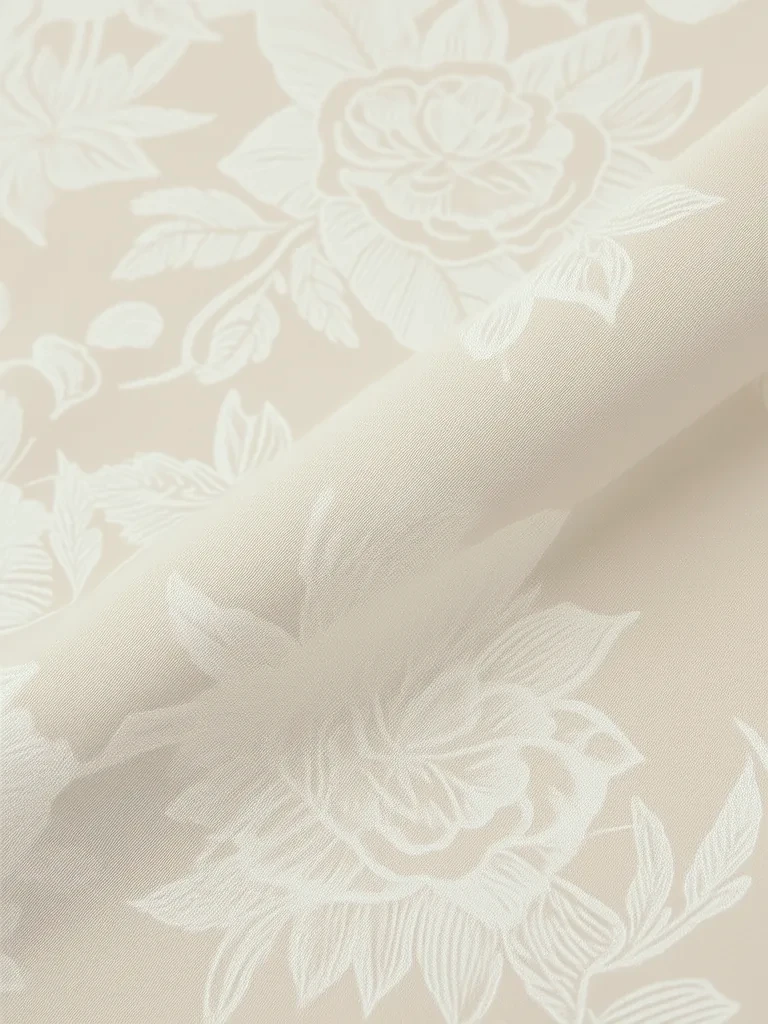
Custom Printed Polyester Bedding Fabric

Tone-on-tone or full-colour print on a single white base — a new design is a new print run, not a new loom setup.

Printing is the cheapest way to differentiate a bedding programme without changing the base cloth. One white polyester base can carry an unlimited number of designs, so a hotel group can give each property its own pattern, or change pattern by season, while holding a single base in stock. This page covers the base cloth, the printing routes, how colour fastness differs between them, and what to settle before you commission a design.

  • MOQ 3000m/design
  • Custom print
Ivory white polyester fabric with a tone-on-tone floral print, matte flat surface

Specifications

Item Value Basis
Construction Plain weave base, printed Owner-confirmed
Composition 100% polyester Owner-confirmed
GSM capability range Confirmed per pattern and weight requirement On request
Width range 150–280 cm Industry reference
Yarn count / density reference 75D × 150D / 190T Industry reference
MOQ 3,000 m per colour On request
Sampling 3–7 days On request
Customisation GSM, width, weave, finish and density set per order Owner-confirmed

How to read this table. Owner-confirmed values are what we hold ourselves to. Industry-reference values describe what the market commonly supplies for this construction and mark the range we can customise within — they are not a fixed measured figure for a single SKU. Order-specific values are set per order, per process and against the approval sample. Final specification is confirmed per order.

Custom manufacturing for OEM/ODM buyers

This page describes a construction, not a single catalogue item. GSM, width, weave, surface finish, density and print are all set per order within the ranges above, against a specification you approve. That is the practical difference between buying a stocked SKU and buying a construction: if your programme needs 240 cm instead of 150 cm, a firmer brush, or a 190T structure rebuilt to your own warp and weft count, the conversation is about what the loom can hold rather than about which item number to pick.

See full OEM/ODM capabilities →

Where it is typically used

  • Hotel groups wanting a different pattern per property or per season
  • Wholesale bedding programmes needing pattern variety from one base cloth
  • Retail and e-commerce bedding brands requiring quick design turnover
  • Decorative pillowcase and duvet programmes with low laundry exposure

How a custom order runs

  1. RequirementSend GSM, width, weave, finish, expected volume and target market.
  2. Swatch / sampleWe propose a construction and send a swatch set, or build a sample piece for a new spec.
  3. Specification approvalGSM, width, density, colour and finish are locked against the approval sample in writing.
  4. Bulk productionProduction runs to the approved spec; inspection can be arranged before shipment.

Technical questions buyers ask

What is custom printed polyester bedding fabric?

Custom printed polyester bedding fabric is a white or dyed polyester base cloth carrying a design applied by printing rather than by weaving. The base is usually plain weave, because a flat surface prints more cleanly than a twill or sateen face. Because the pattern lives in the print and not in the loom, the same base can serve many designs — which is why printing suits programmes that need pattern variety without stocking several woven qualities.

Which printing route should I choose?

Two routes dominate. Pigment printing sits on the surface and gives a slightly firmer hand; it is cheaper and works on almost any base, but its colour fastness in the market commonly sits around grade 2. Disperse printing dyes into the polyester fibre itself, giving a softer hand and commonly around grade 4 fastness, at higher cost. For hotel bedding that will be laundered commercially, disperse is the usual choice; pigment suits decorative or low-wash applications.

What GSM applies to printed bedding?

The base cloth sets the GSM rather than the print. Printed programmes commonly run on a plain-weave base covering roughly 35–100 GSM, and the print adds a negligible amount of weight. Because printing is usually specified against a design brief rather than a weight target, the practical approach is to settle GSM first — sheet weight, opacity after washing — and then choose the print base that meets it.

How is a custom design approved?

Design goes through a strike-off before bulk: we print a short run of the actual design on the actual base cloth at the actual GSM, and you approve colour and registration against it. Screens or digital files are prepared from your artwork; the strike-off is where a design that looked right on screen is checked against fabric. Bulk production only starts after the strike-off is signed off, protecting both sides from a wrong-colour run.

What is the minimum order for a custom print?

Minimum order is 3,000 metres per design, with 3–7 days for sampling. Because each design needs its own screens or print setup, the minimum applies per design rather than per order — five designs means five minimums. Programmes wanting seasonal variety usually consolidate to two or three designs per year and hold the base cloth in stock, keeping setup cost per metre down.

What about colour fastness and certification?

This is the point to be precise about. In the market, pigment printing commonly reaches around grade 2 and disperse printing around grade 4; the target grade for an Entian order is set per order, per process and against the approved strike-off. If your customer requires a specific grade, say so at enquiry stage so the printing route is chosen to meet it rather than corrected afterwards. OEKO-TEX Standard 100 and ISO 9001 can be arranged on request, and SGS inspection can be booked before shipment.

FAQ

Can I print on a coloured base?

Yes, but the print sits on the base colour, so pale designs will shift. Most programmes print on white or ivory so the design reads as intended.

How many colours can a design use?

That depends on the printing route and the screen count for rotary printing. Digital printing allows more colours without added setup; tell us the design intent and we will advise which route fits.

Will the print crack or fade after washing?

Pigment prints sit on the surface and are more prone to cracking and fading under commercial laundering; disperse prints dye the fibre and hold better. If the bedding will be washed industrially, specify disperse.

Do I own the design?

You retain the design you supply. We print to your artwork and do not resell your pattern; confirm the arrangement in writing before the first run.

What is the minimum per design?

3,000 metres per design, because each design needs its own setup. Sampling takes 3–7 days and bulk starts after the strike-off is approved.

Ask for the specification sheet

Tell us the GSM, width and target market, and we will come back with the matching construction, a swatch set and a quotation for the volume you need.

Send requirements
Typical reply in 30 min · 9:00–21:00 (GMT+8) WhatsApp