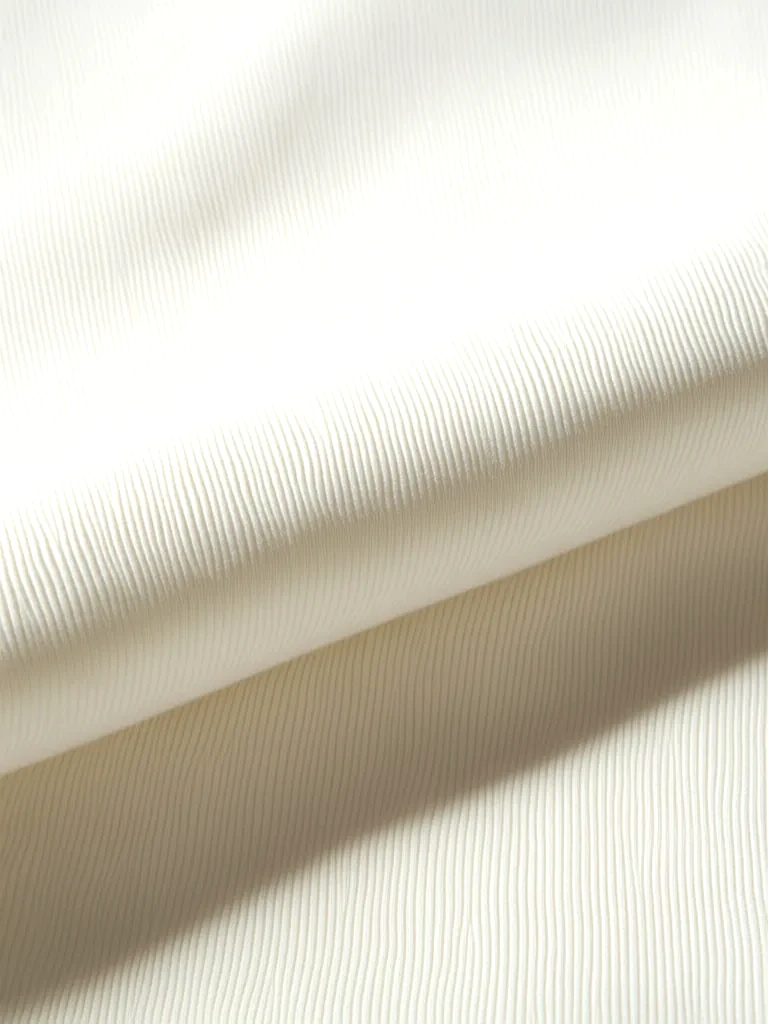
Polyester Twill Bedding Fabric

Diagonal twill polyester with more body and better crease recovery than plain weave — for hotel sheets that must hold a crisp fold.

Twill is what you specify when plain weave feels too limp. By floating each warp yarn over two or more weft yarns, the cloth gains a visible diagonal rib and a denser structure — the same logic that makes denim durable. For hotel bedding that translates into better crease recovery, less see-through at a given GSM, and a surface that keeps a pressed fold through a commercial laundry cycle. GSM, width and finish are set per order.

  • GSM 80–140
  • Hotel-grade durability
Ivory white twill polyester fabric with clear 45-degree diagonal ribs, matte finish

Specifications

Item Value Basis
Construction 2/1 twill, matte finish Owner-confirmed
Composition 100% polyester Owner-confirmed
GSM capability range 80–140 Industry reference
Width range 150–280 cm Industry reference
Yarn count / density reference 75D × 150D / 190T Industry reference
MOQ 3,000 m per colour On request
Sampling 3–7 days On request
Customisation GSM, width, weave, finish and density set per order Owner-confirmed

How to read this table. Owner-confirmed values are what we hold ourselves to. Industry-reference values describe what the market commonly supplies for this construction and mark the range we can customise within — they are not a fixed measured figure for a single SKU. Order-specific values are set per order, per process and against the approval sample. Final specification is confirmed per order.

Custom manufacturing for OEM/ODM buyers

This page describes a construction, not a single catalogue item. GSM, width, weave, surface finish, density and print are all set per order within the ranges above, against a specification you approve. That is the practical difference between buying a stocked SKU and buying a construction: if your programme needs 240 cm instead of 150 cm, a firmer brush, or a 190T structure rebuilt to your own warp and weft count, the conversation is about what the loom can hold rather than about which item number to pick.

See full OEM/ODM capabilities →

Where it is typically used

  • Hotel sheets and duvet covers in premium and heavy-duty tiers
  • Contract bedding for properties running aggressive laundry cycles
  • Wholesale and distributor programmes needing better crease recovery
  • Bed runners and table linen where a directional surface is acceptable

How a custom order runs

  1. RequirementSend GSM, width, weave, finish, expected volume and target market.
  2. Swatch / sampleWe propose a construction and send a swatch set, or build a sample piece for a new spec.
  3. Specification approvalGSM, width, density, colour and finish are locked against the approval sample in writing.
  4. Bulk productionProduction runs to the approved spec; inspection can be arranged before shipment.

Technical questions buyers ask

What is polyester twill bedding fabric?

Polyester twill bedding fabric is woven with a diagonal structure: each warp yarn passes over two or more weft yarns before going under, producing the characteristic 45-degree rib. The float makes the cloth denser and stronger than plain weave at the same yarn count, and it drapes with more weight. In hotel bedding twill is chosen when sheets must survive hard laundering and still look pressed at the fold, because the diagonal structure resists the sharp creasing that plain weave develops after repeated cycles.

How does twill differ from plain weave in use?

Three practical differences matter to a buyer. Twill is denser at the same GSM, so it is less likely to show the mattress through a white sheet. It recovers from creasing better, which shows up as a cleaner fold straight out of the laundry. And it has directional texture: light rakes across the diagonal ribs, reading as a slightly richer surface than flat plain weave. The trade-off is weight — twill at the low end of the GSM range can feel heavier than expected.

What GSM range is realistic for hotel twill?

The market commonly supplies twill bedding fabric roughly between 80 and 140 GSM, sitting above plain weave because the float structure adds weight. Around 80–100 GSM suits mid-tier hotel sheets where durability matters more than a light hand; 110–140 GSM is chosen for premium programmes and for markets where laundries run aggressive cycles. Final GSM is confirmed per order and should be set against your own wash test rather than assumed from a catalogue.

Is the diagonal rib always visible?

On a matte finish the rib shows clearly and is the visual signature of twill. On a brushed or peach-skin finish the pile softens the rib and the surface reads closer to a plain cloth, which some buyers prefer for a quieter look. Decide which you want before sampling: the same twill base can be supplied matte, brushed or peach-skin, and rib visibility changes with the finish rather than with the weave.

What widths and MOQ apply?

Widths run from 150 cm to 280 cm and the minimum order is 3,000 metres per colour, with 3–7 days for sampling. Wide twill at the top of the GSM range is the hardest combination to guarantee, because the diagonal float and the heavy pick count both stress the loom. If your programme needs 280 cm at 140 GSM, raise it early so we confirm against the loom rather than quote an assumption.

What about colour fastness and inspection?

Colour fastness follows the dyeing or printing route rather than the weave. In the market, pigment printing commonly reaches around grade 2 while disperse printing and dyeing commonly reach around grade 4; the target for your order is set per order, process and approval sample. OEKO-TEX Standard 100 and ISO 9001 can be arranged on request, and SGS inspection can be booked before shipment. Confirm current status before quoting any certification downstream.

FAQ

Why is twill more expensive than plain weave?

More weft picks per centimetre and a denser structure mean slower loom output per metre. The cost gap is production time, not raw material, which is why twill at the same GSM usually prices above plain weave.

Will the diagonal rib show through a printed design?

Slightly, on light coverage. Heavy print hides it, but a pale tone-on-tone design will pick up the rib direction. If you need a completely flat print surface, specify plain weave as the print base instead.

Can twill be brushed?

Yes, but brushing flattens the rib and the cloth reads closer to plain weave. If the diagonal structure is the selling point for your market, keep the matte finish.

What GSM works for a hot climate?

Around 80–100 GSM is the usual band for warm-climate hotel programmes, where heavier twill can feel warm. Confirm with your own wash trial rather than relying on the number alone.

What is the minimum order and sampling time?

3,000 metres per colour, with 3–7 days for sampling. Bulk production starts after the approval sample is signed off, and monthly capacity is around 1 million metres.

Ask for the specification sheet

Tell us the GSM, width and target market, and we will come back with the matching construction, a swatch set and a quotation for the volume you need.

Send requirements
Typical reply in 30 min · 9:00–21:00 (GMT+8) WhatsApp